The driver is the only club in the bag that requires an ascending angle of attack. Ball position, spine tilt, tee height, and tempo are all different from the iron game. Most amateur driving problems are not swing problems. They are setup problems that make a good swing impossible before the club moves.
These ten tips are ordered from address to finish. The early ones are where most distance and direction problems originate, and most golfers skip them to work on the later ones. The full Driving video library covers each with detailed instruction from the coaches who teach it best.
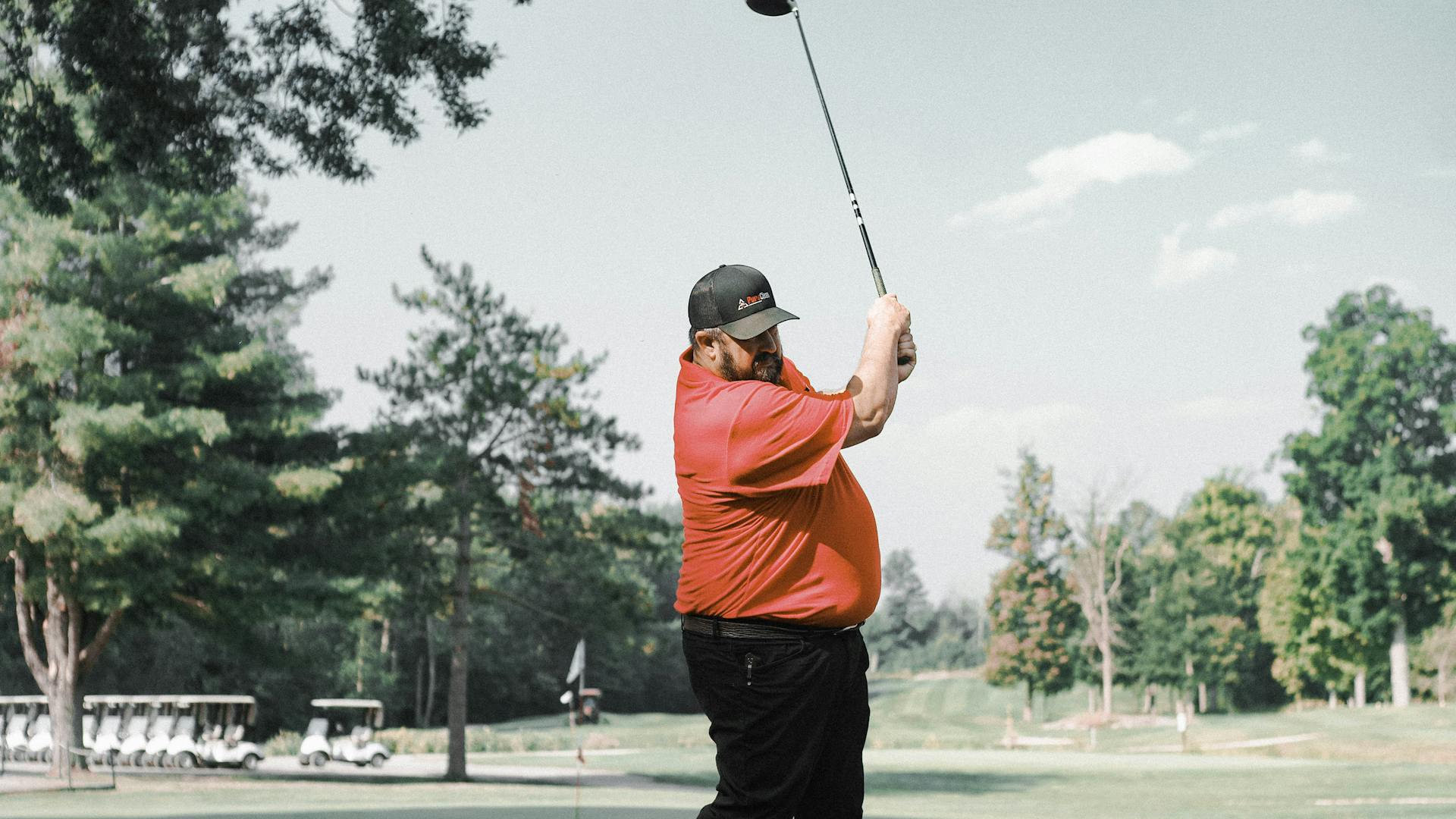
Tee Height
Tee the ball so the equator sits level with the top edge of the driver face. Most amateurs tee too low, which promotes a descending blow and added spin. A higher tee encourages the shallow, ascending strike that maximises carry. It is the simplest variable in driving and the most consistently wrong.
Ball Position
Just inside the lead heel, further forward than any iron. This single adjustment ensures the club is ascending through impact rather than descending. Moving the ball back in the stance to gain control is the most common setup mistake: it adds spin, reduces carry, and promotes a left-to-right ball flight.
Stance Width
Slightly wider than shoulder-width. A wider base resists lateral sway and gives the hips room to clear on the downswing. A narrow stance restricts hip turn and produces a swing that is all arms, with no lower-body contribution to speed.
Spine Tilt Away from the Target
At address, the trail shoulder is lower than the lead shoulder, and the head sits behind the ball. This tilt sets up an ascending angle of attack and keeps the head in position through impact. Golfers who set up level or tilted toward the target promote a steep, glancing blow regardless of what the swing does afterward.
Grip Pressure
Lighter than most golfers use. Heavy grip pressure locks the wrists and kills clubhead speed. Hold the grip firmly enough to control the club through impact and no more. The feel most golfers are looking for is the hands doing very little while the clubhead swings freely.
The Full Shoulder Turn
The driver requires the most shoulder turn of any club. The lead shoulder should reach under the chin on the backswing. Restricting the shoulder turn to protect balance or timing produces a short backswing with no stored energy to release on the way down.
Sweeping the Ball
The driver should contact the ball on the upswing, not on the way down. A positive angle of attack of 3 to 5 degrees reduces spin and maximises carry. It is produced by ball position, spine tilt, and a shallow swing path, not by consciously trying to scoop the ball at impact.
Hip Clearance on the Downswing
The hips must rotate through and clear before the arms swing through. Golfers who fail to clear the hips get blocked, or have to flip the wrists at impact to square the face. The feel: the lead hip pocket moving away from the ball to start the downswing, before the arms begin to move.
Driver Tempo
The driver swing should feel the slowest in the bag, not the fastest. Rushing the transition from backswing to downswing destroys the sequence that generates speed. A deliberate pause at the top restores the correct order: hips first, then shoulders, then arms, then the club.
A Balanced Finish
Weight entirely on the lead foot, hips facing the target, belt buckle at the ball. A balanced finish is diagnostic: it tells you that the swing path, weight transfer, and tempo were correct. Golfers who fall back, spin out, or stop the swing at impact are revealing a problem that happened earlier in the sequence.
See Driving videos →Driving & Distance Category →
For the full driving library covering setup, swing, and fault-fix, see the category page.
How do I hit a driver further?
Distance comes from clubhead speed and a square strike. The fastest improvement for most amateurs is fixing angle of attack: moving the ball forward in the stance, increasing spine tilt away from the target, and widening the arc on the backswing. After that, lighter grip pressure and a slower transition from backswing to downswing add measurable speed without changing the swing shape.
How should I tee the ball for a driver?
Tee the ball so the equator sits level with the top edge of the driver face. Most amateurs tee too low, which promotes a descending blow and excess spin. A higher tee encourages the ascending strike that maximises carry distance. The exact height varies slightly with swing style, but the top-of-the-face baseline is a reliable starting point for most golfers.
Why do I slice the driver but not my irons?
The driver slice usually has a different cause than iron slices. The most common driver-specific cause is a steep angle of attack combined with an open face at impact. Ball position too far back in the stance is the setup error that produces this most often. Moving the ball forward, increasing spine tilt at address, and swinging out through the ball rather than across it fix most driver slices without changing the iron swing.