Ball striking is the foundation of everything. Top 10 ball striking drills target the single most important mechanical variable in the golf swing: where the club bottoms out relative to the ball. All fat shots, thin shots, and toe-strikes trace back to an inconsistent low point.
These drills are built around feedback: they tell you what is actually happening at impact, not what you think is happening. Work through them with specific attention to what each drill reveals about your low point. The Ball Contact & Striking and Irons categories have the full video library.
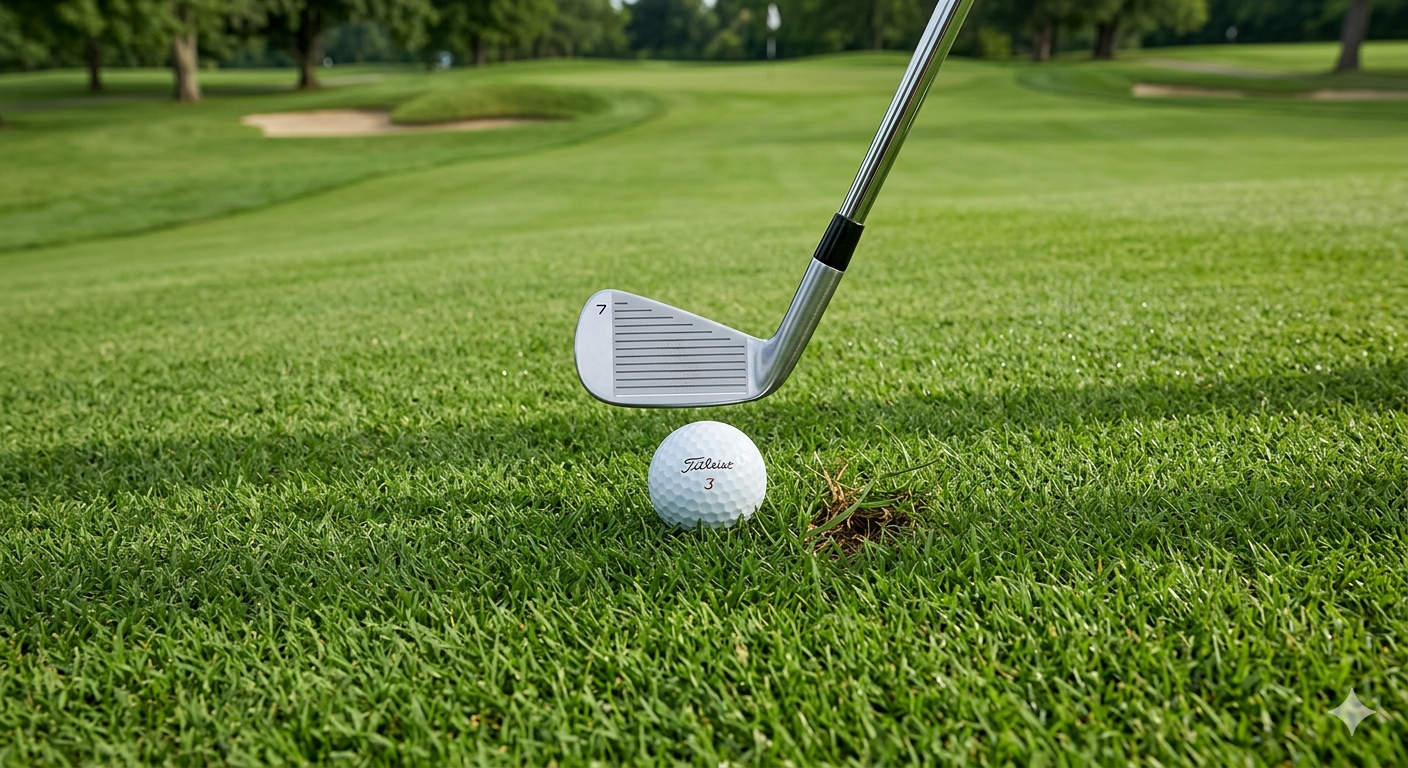
The Divot Board Drill
Strike shots off a divot board or similar feedback tool that reveals where the club enters the ground relative to the ball. The divot should start at or just forward of the ball position. If it starts behind the ball, the low point is too far back.
Feet Together Drill
Hit 7-iron shots with your feet about six inches apart. The reduced base forces you to maintain your spine angle and find the correct low point. Most golfers make better contact with feet together than they do with a full stance.
Ball Position Check
Place a club on the ground perpendicular to your target line, directly under the ball. For a 7-iron, the ball should be just forward of centre in your stance. Incorrect ball position is one of the most common and least-checked causes of inconsistent contact.
Shaft Lean at Address
At address, your hands should be slightly ahead of the ball, creating forward shaft lean. This sets the conditions for a descending blow that catches the ball before the ground. Most amateur golfers have the shaft vertical or leaning away from the target, which produces fat contact.
The Coin or Towel Drill
Place a coin or towel two inches behind the ball and practise striking the ball without touching the coin or towel. This forces the swing arc to bottom out forward of the coin/towel, which means the club is striking the ball before the ground. Direct feedback on every swing.
Impact Tape/Impact Spray
Apply impact tape or foot spray to the face of an iron and hit five shots. The marks reveal exactly where on the face you are making contact. Toe strikes, heel strikes, and low-face contacts each indicate different swing faults. Knowing the pattern is the first step to fixing it. You can also use golf impact spray instead of tape which is just as effective.
See Ball Contact videos →Brush the Grass Drill
Without a ball, take slow-motion swings and focus on where the club brushes the grass. It should brush forward of your ball position. If it brushes behind where the ball would be, your low point is too far back. Repeat this fifty times to train the correct arc.
Maintain Posture Through Impact
Early extension: the hips thrusting toward the ball in the downswing, is the most common cause of inconsistent contact. Practise swings where you hold your hip-to-ball distance constant from address through impact. Film yourself from down the line to confirm.
Slow Motion Swings
Hit balls at 30 percent speed with a deliberate focus on the impact position. Slow motion removes the timing variable and lets you feel what correct contact actually requires. You cannot train impact position at full speed until you can feel it at slow speed.
Track Your Smash Factor
If you have access to a launch monitor at a range, smash factor tells you more about contact quality than ball flight does. A smash factor above 1.45 with an iron indicates solid contact. Below 1.38 indicates significant energy loss from off-centre strikes.
See Irons videos →Ball Contact & Striking Category →
For the full ball contact library covering low point, compression, and miss diagnosis, see the category page.
Why do I keep hitting the ball fat?
Fat shots mean the club is bottoming out behind the ball rather than at or ahead of it. The most common cause is early extension: the hips moving toward the ball in the downswing, which raises the spine angle and shifts the low point backward. Maintaining your hip-to-ball distance from address through impact eliminates the majority of fat shots.
How do I hit the ball first and then the turf?
Ball position and shaft lean at address set the conditions for ball-first contact. The ball should be in the centre of the stance for short irons, and the hands should be slightly ahead of the ball at address with the shaft leaning toward the target. Maintaining that forward shaft lean through impact is what creates the descending blow.
What causes thin shots in golf?
Thin shots and fat shots share the same root cause: an inconsistent low point. A thin shot means the club has already started rising by the time it reaches the ball. This is most often caused by early extension or excessive weight on the back foot at impact. The coin drill and brush-the-grass drill both address the low point directly.